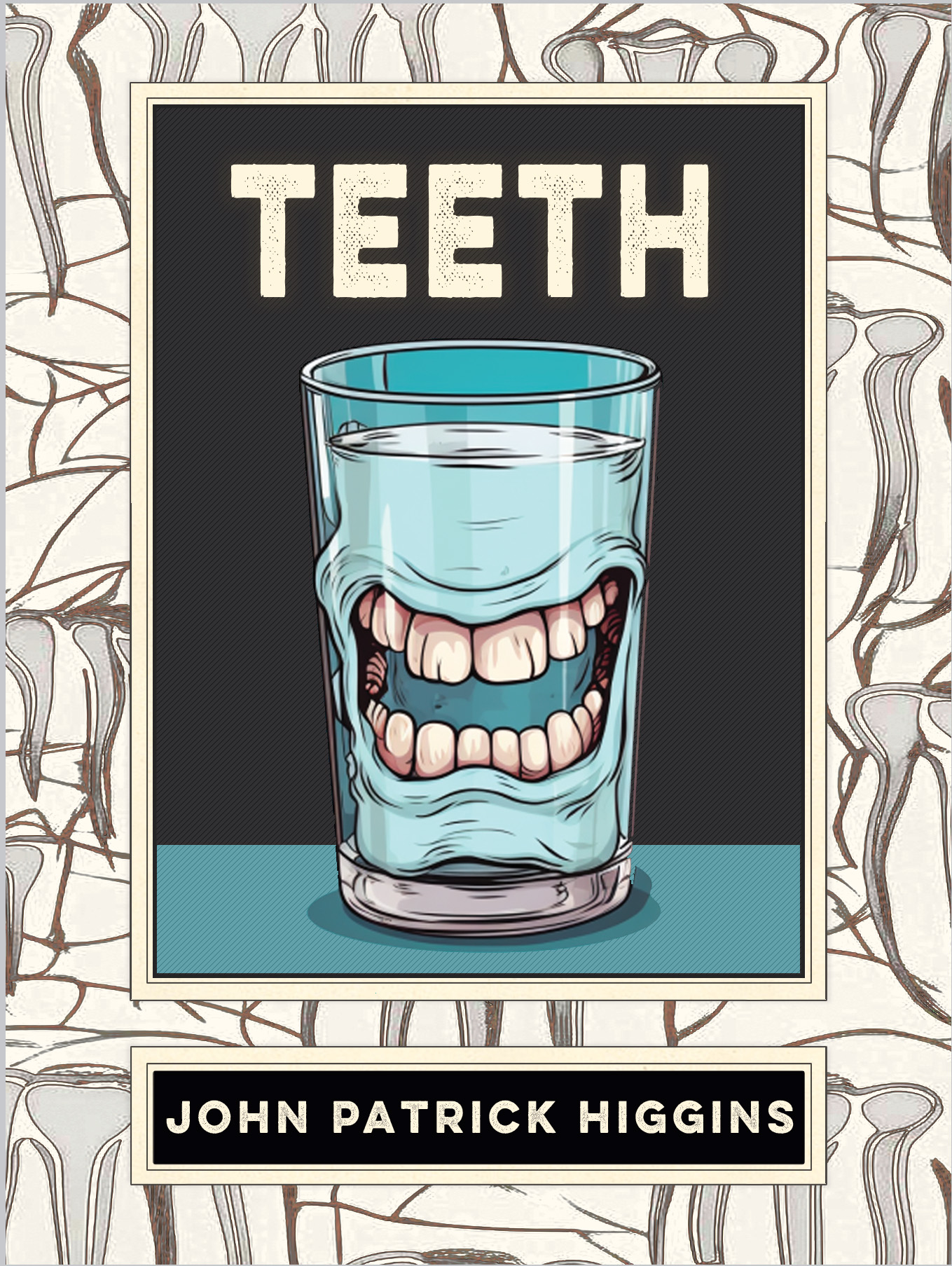
Teeth, like a weeping father at a wedding, give you away. Like St Peter, they will betray you three times: breakfast, lunch and dinner. Teeth are a memento mori, a sudden glimpse of the naked skull beneath the skin.
John Patrick Higgins has had bad teeth for as long as he can remember and you might expect him, being English, not to notice. But he has noticed, and he’s doing something about it.
This book recounts his journey from a mouthful of moist gravel to a pristine, pacific smile, with the Pole-star wattage of a Hollywood A-lister.
But first comes the horror of “stabilisation”. The trenches dug into his gums. The water-boarding horror of the dentist’s chair. The deforestation of his bank account.
Will he survive the ordeal? And if he does—blinking into that bright new day—will there be anything to smile about?
Teeth: An Oral History is a bitingly funny story, illustrated by the author, and featuring a glossary of useful terms, as most of his references pre-date the discovery of fluoride.
Notices
“Finally, the pandemic gave John Patrick Higgins something to smile about. With a mask, he could grin without fearing the grimaces of others. In Teeth: An Oral History, Higgins provides a history of the mouth (his own and a handful of famous others) and invites the reader on a series of dental appointments to improve the quality and aesthetics of his own teeth. As he frames the beginning of the text: ‘Teeth, more than eyes, are the window to the soul.’ … [Higgins] deflects much of his own vulnerability through jokes or puns. At his first dental appointment to have seven bad teeth pulled, he names each tooth in the manner of Snow White’s seven dwarfs: ‘Achey, Splintery, Barely-Therey, Chippy, Stainy, Ghastly and Grizzled-Battle-Scarred-Castle-Collapsing-Into-theSeay.’ Despite his light tone, he is speaking about a serious subject—body shame…. But the beauty of Higgins’s biting wit is that he’s aware of it.”
—Anna Rollins, in American Book Review
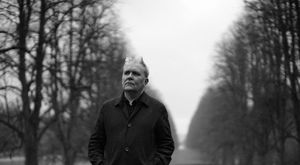
John Patrick Higgins is a writer and director. He lives in Belfast, where it rains.