News
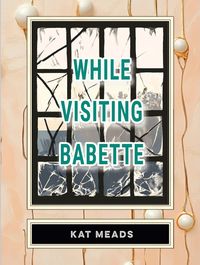
☞ While Visiting Babette in Never Imitate
Jackie Law weighs in on Kat Meads’ While Visiting Babette in Never Imitate:
“While Visiting Babette is an intriguing novelette that sends the reader down a rabbit hole reminiscent of wonderland. Unlike Alice’s experiences, the various characters are human albeit with habits and outlooks that remain unexplained. This never detracts from what is a largely surreal snapshot of life inside a locked facility as experienced by the inmates…. Their world is one of doors and windows, of ponds and insects. There are games and stories, most of which make little sense except to the players. And yet the reader is carried through each of their thoughts and pursuits. Moments of violence are mostly tempered with a dash of piquant humour…. Original but also engaging. A rare little story that rewards careful reading.”
—Jackie Law, in Never Imitate
☞ Kat Meads on Writing While Visiting Babette
Books by Women has published an essay by Kat Meads about writing her novella, While Visiting Babette:
“Not to give too much of the plot away: someone does try to escape in While Visiting Babette. And that someone succeeds.”
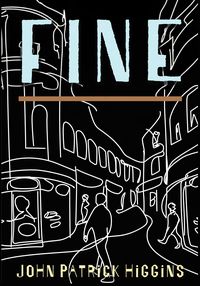
☞ Fine in The Arts Fuse
Vincent Czyz in The Arts Fuse on John Patrick Higgins’ Fine:
“Higgins is a deft writer whose prose often displays a spare lyricism…. I doubt there’s a page that went by that I didn’t laugh at least once [but] the novel is not without tragedy…. While loneliness, aging, and death are overriding concerns in the novel, Fine also takes on the winner-take-all society Western capitalism has manufactured…. If you go ahead and pick up a copy of Fine, the worst that’s likely to happen is that some sentence, no matter the page, will make you laugh or giggle or chortle. The best? You get the laughs and, after turning the last page, you’ll find yourself just a smidge more reconciled to one day becoming Aunt Sylvia.”
—Vincent Czyz, in The Arts Fuse
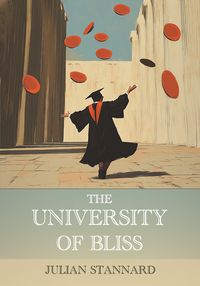
☞ Julian Stannard's The University of Bliss in the TLS
W.J. Davies on The University of Bliss:
“The University of Bliss is a scathing satire of British higher education set in a dystopian near future. [Stannard’s grim comedy] is barely hyperbole…. The world that Stannard depicts is already here…. [A] ferociously funny condemnation of university commercialization and the tyranny of rankings, student satisfaction scores and bureaucracy run amok.”
—W.J. Davies, in Times Literary Supplement
☞ Kim Wiltshire on Julian Stannard's The University of Bliss in Everybody's Reviewing
Kim Wiltshire on Julian Stannard’s The University of Bliss:
“This is not just a book for those working in humanities in HEIs across the UK, this doesn’t just speak to that handful of Creative Writing academics who get asked ‘Yes, but what are you employability statisitics like?’ It is for anyone who values education, who values culture, who considers the world their children or grandchildren are going to inherit in terms of learning, philosophy, literature and art. It is a highly readable novel, biting, funny and fast paced, but at the same time, do take a pause every now and then to consider the world Stannard is creating—how close do you think we’re getting to that now?”
—Kim Wiltshire, in Everybody’s Reviewing
☞ Devyn Andrews on Kat Meads' in L'Esprit Literary Review
“In just over 100 pages, Mead’s lean but energetic story forgoes both extraneous plot detail and subjective self-reflection in favor of keen, outward-facing observation…. While Visiting Babette is largely propelled by Meads’ skillfully deployed powers of suggestion; no explanation is offered for the women’s institutionalization, nor is the work interested in taking up this thematic work as its mantle…. wonderfully playful.”
—Devyn Andrews, in L’Esprit
☞ Fine in Pop Matters
Reggie Chamberlain-King on John Patrick Higgins’ Fine:
“[A] witty debut novel…. The lines of action are as invisibly elegant and neatly crafted as any one of the writer’s beautiful sentences. Both gut-bruisingly funny and achingly sad. The line between the tragic and the comic is, of course, a fine one.”
—Reggie Chamberlain-King, in Pop Matters
☞ Gnome Appreciation Society on John Patrick Higgins' Fine
“It’s been a long time since a book has made me laugh this much…. Our main character is Paul Reverb, great name, seems nice enough, a gentle well meaning person and what follows is a series of ridiculous events. Paul is lonely, tragically so it seems at times, nothing seems to go his way, in fact things seem to become sentient enough to make sure they don’t go his way, from buying a coffee, meeting mates in the pub or a nice quiet toss in the privacy of his own lounge, when Paul puts his mind on a task you soon learn to spot the incoming catastrophe…. Absolutely wonderful book, great characters, funniest writing ever and if you ever wanted to get into the head of a horny lonely man then this is the book for you.”
—Jason Denness, in Gnome Appreciation Society
☞ The University of Bliss in the Westmeath Independent
Anne Cunningham, in her First Chapters review series, takes on Julian Stannard’s The University of Bliss:
“With many acid observations on how our hallowed halls of learning have plummeted into grimy halls of profit, and of how college deans have been persuaded to ‘fumble in the greasy till’ of questionable sponsorship and patronage, this funny, futuristic satire is one that’s not so much 2035 as 2025.”
—Anne Cunningham, in the Westmeath Independent
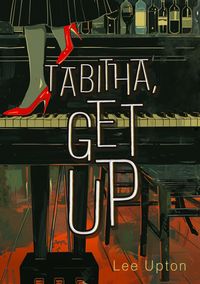
☞ Scientific American Recommends Lee Upton's Tabitha, Get Up
In its year-end list of 78 recommended books, Scientific American recommends Lee Upton’s novel:
“This book is delightful for readers and would-be writers alike. The main character is trying to kick-start her career as a biographer, and her ups and downs are unexpected and entertaining. Think Diane Keaton in the 2003 movie Something’s Gotta Give.”
—Maria-Christina Keller, in Scientific American