News
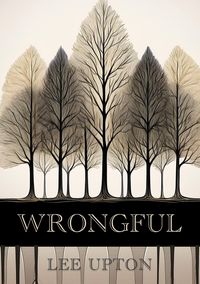
☞ Wrongful in Making Good Stories
Jen Paul gives 4 stars to Lee Upton’s Wrongful in Making Good Stories:
“The ending satisfactorily mirrors the beginning’s roving structure … while expounding on the baser emotions of greed, festering guilt, and desire for respect, adoration, and notoriety, that form more complex motivations…. In offering many characters as potential culprits, each of whom harbors possible reasons for acting against Mira, the story unfolds gradually, following Geneva’s dogged pursuit of uncovering the truth no matter the consequences or mishaps that arise. The literary, and generally artistic, lens applied throughout offered an easy entry point for viewing and relating with the various perspectives presented, as attaining recognition, if not praise or adequate remuneration, was an evident incentive driving events.”
—Jen Paul, in Making Good Stories
☞ Wrongful in MER
Emily Webbers reviews Lee Upton’s Wrongful in MER Literary:
“This is Upton’s ode to Agatha Christie mysteries. The novel starts with a dead body, and later another one turns up. There are also many characters, and the reader must puzzle together the real relationships between them and Mira and their true intentions because there is a killer in their midst. Wrongful is a fun read—a delightful mix of snark, quirky characters, and murder—where the reader gains insight into how we often fail to perceive others properly, how easy it is to get things wrong particularly when one is so desperate for answers, and when one wants to relieve themselves of guilt.”
—Emily Webber, in MER
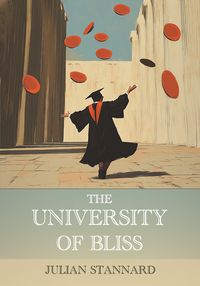
☞ Julian Stannard's The University of Bliss in the Fortnightly Review
Anthony Howell is clearly having a good time in this Fortnightly Review article, “The University of Closed Minds: On Julian Stannard":
“Julian Stannard’s novel combines SF and satire. But the story it tells happily wanders off into Rabelaisian humour, fireworks of vocabulary and exuberant nonsense. Here William Burroughs meets C.P. Snow. Stannard is a poet, and his novel is the sort of book the reader can open anywhere and enjoy the lighting switches from one sentence to the next, the elusive allusive phrases…. The narrative is a clothesline hung with flimsy characters, often shat-upon by their robot hybrid pets, and it glories in its adjectival and acronymic subject clusters—breaking most of the rules about adjectives churned out so thoughtlessly by writing workshops. But the novel does not neglect drama…. Well worth a read, Brave New World for academia, if you like.”
—Anthony Howell, in The Fortnightly Review
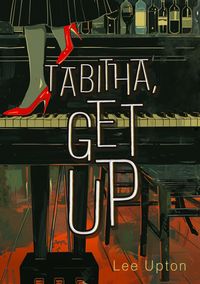
☞ Gnome Appreciation Society on Lee Upton's Tabitha, Get Up
In Gnome Appreciation Society, Jason Denness raves over Lee Upton’s Tabitha, Get Up:
“Far more experimental than your run of the mill romance novel…. crammed with brilliant characters…. There are some challenging scenes of loneliness and depression and even at its darkest moments Tabitha’s humour shines through. There is a real nuttiness to this book…. Tabitha is the sort of person you can see bits of yourself in…. Moving away from chapter structures we have notes, lists, voicemails, texts, therapy sessions, email exchanges and panic attacks…. The funniest book I have read this year and it is gonna take some beating. Highly recommended.”
—Jason Denness, in Gnome Appreciation Society
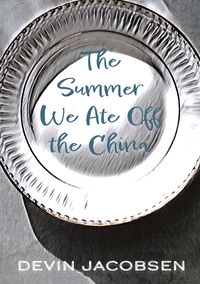
☞ Devin Jacobsen's The Summer We Ate Off the China in The Big Issue
Patrick Maxwell on Devin Jacobsen’s stories:
“If for nothing else, you should read Devin Jacobsen’s short story collection The Summer We Ate Off the China for its wonderful prose…. We are in a similar, slightly deranged world to the early stories of Will Self. The grains of the ordinary are inverted and perverted…. This is a book about language and its power, and the more enjoyable and interesting for it.”
—Patrick Maxwell, in The Big Issue
☞ Devin Jacobsen's The Summer We Ate Off the China in the Times-Picayune
A review of Devin Jacobsen’s The Summer We Ate Off the China:
“[Devin Jacobsen has a] willingness to experiment. He’s not afraid to take out the English language for rambling country drives, his excursions sometimes touched by hairpin turns…. Perhaps no one since John Kennedy Toole has marshaled such a menagerie of characters and settings to tell a tale.”
—Danny Heitman, in The Times-Picayune
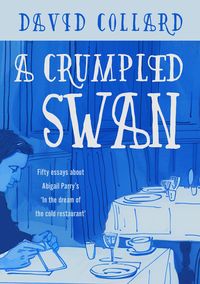
☞ David Collard's A Crumpled Swan in Publishers Weekly
Publishers Weekly chimes in about David Collard’s upcoming A Crumpled Swan:
“[Collard’s] meticulous exegesis illustrates how even a brief poem can contain untold layers of meaning. It’s a rousing celebration of the power of literature.”
☞ Devin Jacobsen's The Summer We Ate Off the China in the Village Voice
In the Village Voice, A review of Devin Jacobsen’s The Summer We Ate Off the China:
“A terrific collection—wide, deep, and way hipper than John Irving. Jacobsen writes about big issues and small towns, but he always writes beautifully…. a writer worth discovering.”
—Gideon Leek, in The Village Voice
☞ David Collard's A Crumpled Swan in Kirkus Reviews
Kirkus Reviews on David Collard’s forthcoming collection of fifty essays on poetry, A Crumpled Swan:
“50 brief, illuminating essays melding memoir, close reading, literary analysis, and cultural criticism…. Collard’s insightful essays reveal him, as well, as a sympathetic presence, sensitive and wise. Fresh, perceptive literary essays.”
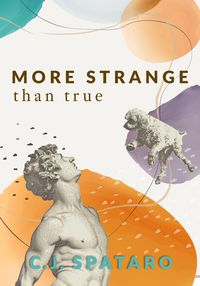
☞ C.J. Spataro's More Strange Than True in Write Now Philly
In Write Now Philly, Ronan Brinkley “explores ownership vs. love” in C.J. Spataro’s More Strange Than True:
“Short, strange and sweet, More Strange Than True will break your heart and sew it back together again.”
—Ronan Brinkley, in Write Now Philly