News
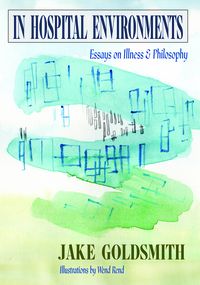
☞ In Hospital Environments in WordGathering
“Jake Goldsmith has gifted us with another epic. In this insightful collection of essays, Goldsmith shares his thoughts on ableism in the midst of the COVID-19 pandemic, toxic social media trends, and his deceased (possibly murdered) cat, Lemons. In all cases, he applies his knowledge of philosophy and his unusual perspective to offer readers a unique take on global events…. Wend Rend’s black-and-white drawings, often done in caricature style, perfectly compliment the text…. Goldsmith’s book thereby showcases the works of two gifted and insightful disabled artists (Goldsmith and Rend). It is a very fitting offering from the creator of the Barbellion Prize.”
—Kate Champlin, in WordGathering
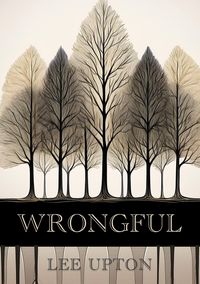
☞ Wrongful in The Bookends Review
“It’s not often that a writer is equally adept at poetry, fiction, nonfiction, and literary criticism, yet Lee Upton has been an exception to the rule for over a decade. Unsurprisingly, her latest novel—Wrongful—only cements that fact, as it’s a thoroughly stirring and imaginative but realistic mystery/character study (in the self-aware vein of Agatha Christie) that exemplifies her many talents…. Wrongful is another triumph for Upton, whose captivating core mystery is realized through lovely prose and enhanced by a wide array of convincingly multilayered and morally shaky characters. If you’re already a fan of Upton, you’ll surely adore what she’s done here, and if not, you almost certainly will be as soon as you finish the first chapter.”
—Jordan Blum, in The Bookends Review
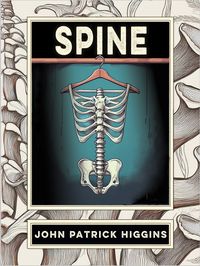
☞ John Patrick Higgins' Spine in Gnome Appreciation Society
“Higgins just brings out the maniacal laugh in me…. Well written, so easy to read and the funniest book of the year!”
—Jason Denness, in Gnome Appreciation Society
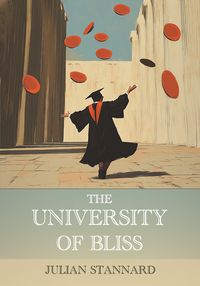
☞ The University of Bliss in the Canberra City News
Colin Steele has fun with Julian Stannard’s The University of Bliss:
“An over-the-top dystopian satire set in 2035 Britain. The narrative follows the arrival of the newly appointed vice chancellor Gladys Nirvana, whose very large salary is based on her expertise in “pure reflectivity”…. The Department of Wellbeing ensures that demoralised academics must stroke an increasingly depressed dog…. will undoubtedly resonate in academia.”
—Colin Steele, in Canberra City News
☞ John Baum on Lee Upton's Wrongful in Necessary Fiction
“Upton’s gift for smart and funny lines lighten the novel’s darkness…. As mysteries go, Upton has tapped a few cracks and added a few bends in a time-tested mould, which makes for a solid, surprising, and entertaining read. On the surface, this is a playful novel, but its heft comes from questions about art, reading, writing, and the darker side of human nature.”
—John Baum, in Necessary Fiction
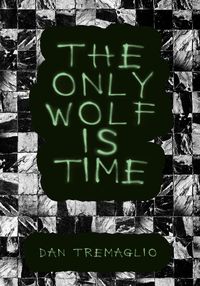
☞ Dan Tremaglio's The Only Wolf Is Time in Heavy Feather
Ria Dhull on Dan Tremaglio’s The Only Wolf Is Time:
“Dan Tremaglio’s The Only Wolf Is Time is a novel told through fragments. These fragments initially seem like discrete objects, pulled in from all sorts of sources—some of these scraps are graffiti tags, some are photographs of sculpture, some are dictionary definitions or screenplay dialogue. There’s a little of everything. But the beauty of Tremaglio’s novel lies in his transformation of these objects. The fragments, although physically separated on the page, cannot be metaphysically separated from one another. Every fragment produces the following fragment and is produced by the preceding fragment; in this way, a narrative is formed—a narrative not written out on the page but formed on the page, pieced together in the style of a stained glass window…. [The Only Wolf Is Time] is a small cautionary tale … a fable, a single scene in a stained glass window. Tremaglio’s craft is astonishing.”
—Ria Dhull, in Heavy Feather Review
☞ Lee Upton's Wrongful in Kirkus Reviews
Kirkus Reviews on Lee Upton’s Wrongful:
“Upton’s novel operates quite effectively as an Agatha Christie–like whodunit, complete with a lineup of colorful suspects and a twisty conclusion. The narrative is further enriched by the author’s musings upon the illusory aspects of real life and fiction…. A captivating depiction of an elusive quest.”
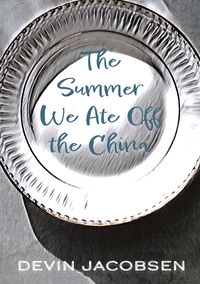
☞ Devin Jacobsen's The Summer We Ate Off the China in Electric Literature
In Electric Literature’s a Spring small press roundup, Wendy J. Fox reads Devin Jacobsen’s new story collection:
“In this wide-ranging collection, the stories move from the American South to Europe and are knitted together with an indelible sense of longing. The characters have wants and needs, yet they are often as dissatisfied as the tourists who visit the Dalí Museum in Florida, and leave in a state of bewilderment. In The Summer We Ate Off The China, Jacobsen captures the human impulse to hope, and our inevitable disappointments.”
—Wendy J. Fox, in Electric Literature
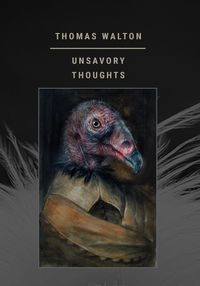
☞ Anne Cunningham on Thomas Walton's Unsavory Thoughts
In her “First Chapters” column, syndicated in the Irish press, Anne Cunningham takes on Thomas Walton’s Unsavory Thoughts:
“[F]unny, and tragic and ironic and all shades in between…. wholly and spectacularly original. His seemingly chaotic spill of words is in fact marshalled out on the page with the precision of a surgeon’s scalpel and it’s a joy to see. Highly recommended.”
—Anne Cunningham, in The Anglo-Celt
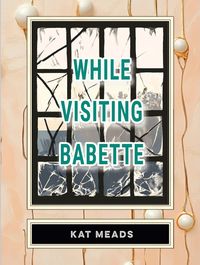
☞ While Visiting Babette in Miracle Monocle
“The prose itself [is] straightforward in a way that reflects institutionalization itself—a soft surrealism in a hazy calm without distracting flourishes…. Like much of the vital heart of this story, the most important elements seem to shimmer just off the page, willing us to find them with a carefully averted gaze….[M]uch of the interest lies just between the lines, just out of sight….”
—Carrie Callahan, in Miracle Monocle