News
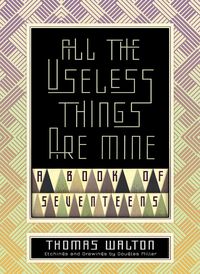
☞ Megan Bickel on All the Useless Things Are Mine in Ruckus
“All The Useless Things Are Mine … will fit in the back pocket of your jeans along with a pen. This is important as you may need other pockets for your wallet, mask, keys, and perhaps a snack if you venture out to read in public—circling or notating bits that resonate or instigate a giggle. Millers’ drawings coordinate well with Walton’s words, as both work to focus on the mundane in order to realize a larger observation about the world…. It’s a pleasure to indulge in momentary readings that end or convulse into viewings of lovely images that are half battled, sometimes fatigued, and always extraordinarily rendered.”
—Megan Bickel, in Ruckus
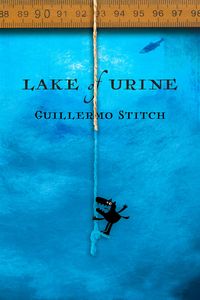
☞ Annabel Gaskel on Lake of Urine in Annabookbel
☞ John C. Adams on Lake of Urine in The British Fantasy Society
“Resolutely self-aware as a piece of art…. deftly delivered with skill and confidence … well worth exploring. In short, if you read one absurdist literary comedy from a debut author this year make it this one.”
—John C. Adams, in The British Fantasy Society
☞ Guillermo Stitch's playlist for Lake of Urine
At Largehearted Boy, Guillermo Stitch presents a playlist for Lake of Urine, with commentary.
☞ Tyler Dempsey on Lake of Urine in Heavy Feather Review
“Guillermo Stitch’s Lake of Urine is a wild ride, which from the get-go sets out its terms and conditions: ‘If anybody tells you this story isn’t true they are lying. It is a true story; I am lying if it isn’t, and I don’t lie,’ reads its playful, meta-modernist opening gambit. Whatever our own normative intuitions as readers regarding what fiction should or shouldn’t be, it is hard, even after a few pages, not to surrender to Stitch’s unflinching audacity, which is everywhere on display.”
–Luke Warde, in Totally Dublin
“Lake of Urine juggles polarities. Magnifies them, to smoke out hypocrisy and depravity in our obsessions…. Stitch’s imagination is envy-inducing. Fans of Donald Barthelme’s most playful prosody, or the breakneck humor of A Confederacy of Dunces, will have to remind themselves to breathe in between those first 18 pages. (If isolated, ‘Seiler’ would be my favorite short story of the last decade.) … Like Joyce, Stitch has enough invented verbiage to expose just how much he gives a shit about offering your mind an anchor. He’s inviting you for a smelly swim aimed at exploding paradigms. Unlike Joyce, Stitch keeps you reading. He’s the hiking buddy that waits just long enough for you to catch up before bounding off again…. 2020 may not see a wilder book.”
—Tyler Dempsey, in Heavy Feather Review
☞ David Gutowski on Lake of Urine in Largehearted Boy
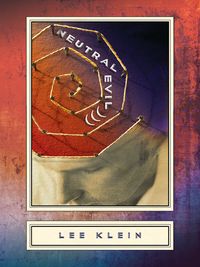
☞ Daniel Green on Neutral Evil ))) in The Reading Experience
“Ultimately, the narrator’s chronicle of his autumnal evening out seems a story about growing up, about finally accepting the prerogatives of adulthood and, if not renouncing, beginning to let go of childish things. This narrative mode is of course one of the principal devices of literary fiction (here becoming a delayed coming-of-age story, perhaps), and Neutral Evil))) renders the story mostly without the suffocating, self-distancing irony found in much autofiction. It’s a quality of the book that most clearly marks it as fiction, the ‘auto’ merely a means to an end.”
—Daniel Green, in The Reading Experience
☞ Jackie Law on Lake of Urine in Never Imitate
“It is rare in the book world to find a story that is truly original while also being eminently engaging…. Dark, quirky, humorous, and engrossing. This is a singular and satisfying read.”
—Jackie Law, in neverimitate
☞ Katherine Cowles on Neutral Evil ))) in Storgy
“Klein’s prose is loose and effortless, a clever, comical game of mental associations combined with incisive social commentary. He likes lists, lots of them, building noun upon noun, adjective upon adjective in a way that is obsessive and relentless; his own words apparently spiralling as he anxiously tries to regain control…. Here, politics and music merge—quite literally—symbolically, forming a central theme in this novella, which is at its heart an homage to the power of sound…. The mood of the evening, of the novella itself, is not always so sparky and electric, the drone of the guitar apparently mapped onto the drone of our narrator’s domestic life. For reality is prone to pierce the escapism of Klein’s big night out, the reality of a certain kind of male experience, which is seemingly bleak, boring: the amalgamated tedium of life…. Deftly, honestly, Klein seems to capture the spirit of manhood in modern-day America: taking pains to check his privilege … he realises, all the same, the legitimacy of his own grievances…. It’s a depressing, but honest, backdrop to what is ultimately an anxious, angry, energetic novella, sometimes humorous, sometimes heartbreaking in its accuracy.”
—Katherine Cowles, in Storgy
☞ Jason Denness on Lake of Urine in The Gnome Appreciation Society
“This book is totally Wacker-doodle-dandy to the max!… [At] its heart is a wonderful story full of love and heartbreak, exploring the everyday fears that people experience … not the silly ones about spiders … fear brought on by the birth of a child and making sure they get the right life, of being out of your depth and whether or not you’ll be the next world champion burger flipper. At least that is my interpretation and like any great piece of art there are so many different ways of seeing this story.”
—Jason Denness, in Gnome Appreciation Society