News
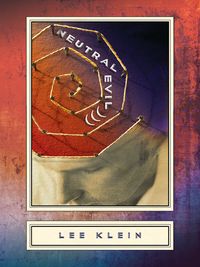
☞ “The Jodhpur Problem,” an excerpt from Neutral Evil )))
Vol. 1 Brooklyn published “The Jodhpur Problem,” an excerpt from Lee Klein’s Neutral Evil ))).
☞ Nicholas E. Barron interviews Lee Klein
At Bidwell Hollow, Nicholas E. Barron interviews Lee Klein about Neutral Evil ))).
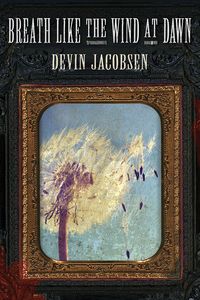
☞ Breath Like the Wind at Dawn in Bookends and Bagends
“Devin Jacobsen is an exciting new author who is crafting powerful own-rules fiction—definitely one to watch.”
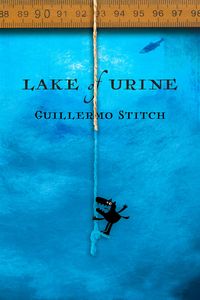
☞ Jess Flarity on Lake of Urine in Out of that World
“This novel reads kind of like Dubliners after you’ve taken a hit of grimy, rat-poison acid and chased it with a glass of raw sewage…. If absurdism is your jam, this book surely will not disappoint you…. The novel defies categorization as well as reader expectations, and truly does take them into a place they’ve never been before, which is exactly what great satire is meant to do.”
—Jess Flarity, in Out of that World
☞ Benoît Lelièvre on Neutral Evil ))) in Dead End Follies
“Lee Klein’s novel Neutral Evil))) is not about [the ideological gap created by the election of Donald Trump], but about living in the world it created. It’s also about drugs, anxiety and minimalist drone music. It’s properly fragmented like the world we live in.”
—Benoît Lelièvre, in Dead End Follies
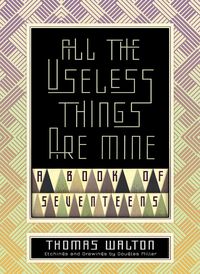
☞ Charles Holdefer on All the Useless Things Are Mine in Dactyl Review
“Although [humor] is present throughout the book, the underlying sensibility is meditative. The lasting impression of All the Useless Things is less one of jokiness than of tenderness: for nature, for creation, for language itself…. Walton sounds a note of modesty and throughout the book, the authority he questions is often his own…. There are no pretensions here for uplift, or for Whitmanian bluster, but reading it was, for me, a boost, a reminder of possibilities. This is highly original work by an active, restless mind, aware of the pressures of time.”
—Charles Holdefer in Dactyl Review
☞ Lee Klein reads from Neutral Evil )))
On the Zero Point Fiction podcast, Lee Klein reads an excerpt from Neutral Evil ))).
☞ Paul Constant on All the Useless Things Are Mine in The Seattle Review of Books
“No matter which of the seventeens most appeal to you—the magisterial or the witty—you will likely find yourself affected by this book: you’ll start to see the world as a series of potential seventeens, just waiting to be written. When you leave your quarantine for the world outside, your eyes will scan around, trying to find pieces you can frame within seventeen words. It’s a constraint that is at once a manageable size but also capable of inspiring revelatory moments.”
—Paul Constant in The Seattle Review of Books
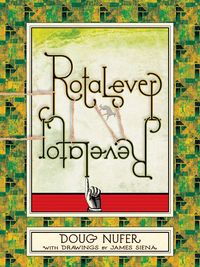
☞ Paul Constant on Rotalever Revelator in The Seattle Review of Books
“This isn’t the first time Nufer has made a flippable book—his Ace Doubles homage The Mudflat Man/The River Boys had the same basic format—but this time Nufer really digs into the idea of what it means to have a book with two separate but equal front covers, first pages, and so on. Revelator Rotalever is a mirror image of Rotalever Revelator but also the two books combine into an ouroboros of language, a long palindrome with two beginnings and two ends, or perhaps no beginning and no end.
“Nufer writes himself into the work this time, shouting his own name into the echo chamber on multiple occasions. The first two words of Revelator Rotalever are “Nufer snips.” The last three words of Rotalever Revelator are “…spins re: fun.” Nufer snips and spins the language. Why? For the fun of it….
“Rotalever is the kind of book that makes you want to stay inside and wrestle, flipping back and forth to see how it speaks to itself. I got my copy a week ago and it’s already battered beyond repair—spine broken, pages bent, edges scuffed from turning and re-turning and returning in a palindromic journey to the end of the beginning and the beginning of the end.”
—Paul Constant in The Seattle Review of Books
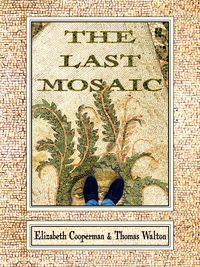
☞ The Last Mosaic in BooksOnGif
“Earlier, I described The Last Mosaic as a book of poetry, but that only captures part of what’s offered in this smart and tiny book. Some of the bursts that fill the pages are poetic verses inspired by the Eternal City. Others offer facts and artistic statements about the locations and artwork found there. It’s the odd and interesting offspring of a Lonely Planet guide to Rome and a chapbook, where all the elements combine to form a literary mosaic of facts, history, art criticism and poetry…. I read this book back in February before the coronavirus kept us indoors. Thinking back on it now, it’s a bittersweet reminder of life before the pandemic, when we were free to roam around cities and examine art and architecture in situ, rather than through a computer screen. I hope those days can return soon. Until then, you should read this book.”