News
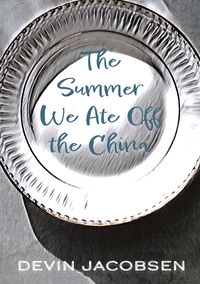
☞ The Summer We Ate Off the China in Heavy Feather Review
“In his beautiful and wide-ranging first collection of stories, The Summer We Ate Off the China, Devin Jacobsen, author of the novel Breath Like the Wind at Dawn, eschews a fashionable cool in favor of big language and deep feeling. Many of these stories wear their literary pedigrees openly…. [A]s Jacobsen shows in this wise collection, simply living your sort of shitty life requires its own kind of courage.”
—Jason K. Friedman, in Heavy Feather Review
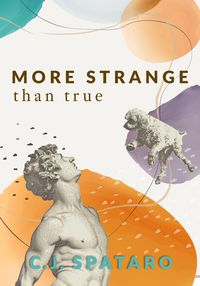
☞ More Strange Than True in Cleaver Magazine
In Cleaver Magazine, Hannah Kroonblawd on C.J. Spataro’s More Strange Than True:
“The novel reads like Spataro had fun writing it; humor and joy are apparent throughout…. This is the kind of book best read in the sunshine or a warm pool of lamplight, a book you might pick up to read in a single afternoon or evening. Spending a few hours with Jewell, Oberon, and Titania brought me back to my own encounters with Shakespeare’s faeries and reminded me of the way storytelling can infuse an ordinary existence with just a little bit of its own magic.”
—Hanna Kroonblawd, in Cleaver
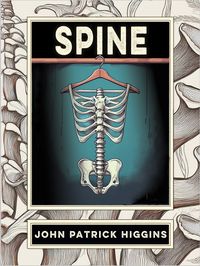
☞ John Patrick Higgins' Spine in the Dayton Daily News
Vick Mickunas on John Patrick Higgins’ Spine, in the Dayton (Ohio) Daily News:
“When I picked up a copy of Spine by John Patrick Higgins and quickly understood that this was a stream of consciousness memoir about his spinal injury and other agonies he has endured I really doubted I wanted to read it. Fortunately after a few pages I recognized the author has a warped somewhat gallows sense of humor…. [B]rutally hilarious….”
—Vick Mickunas, in the Dayton Daily News
☞ The Summer We Ate Off the China in Southern Literary Review
“[Jacobsen’s] thirteen stories are a dance between comedy and tragedy, and as eclectic as I’ve read in an extraordinarily long time…. Ageism, racism, trauma, rape versus consent, the fallout of school shootings, corporate soul-selling, marital angst—the list goes on and on, and all this under two hundred pages. The Summer We Ate Off the China is Americana unfiltered, for better or worse. Keep your eye on Devin Jacobsen.”
—Dawn Major, in Southern Literary Review
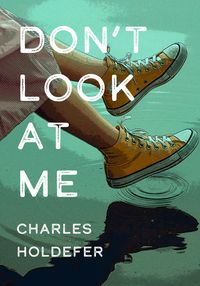
☞ Charles Holdefer's Don't Look at Me in Big Other
“[T]he perfect campus novel, with departmental in-fighting, post-grad rivalry, and the library as the hub of the most important action…. But Holdefer’s novel also subverts the genre … offering a twenty-first century twist, where the characters are aware that nobody outside academia cares a jot about what goes on inside…. While this is a well-constructed and eminently readable novel, it is at the same time breathtakingly audacious…. Don’t Look at Me is also a novel of our times, with much to say about growing up today. It has an anti-bildungsroman aspect to it: things never come right for Holly; she is never turned out as a finished adult, like a plaster figure from a mold. Her trajectory is a series of false starts, of interruptions and compromises, in love as much as anything else, and it ends not with a triumphant launch into the world of adulthood and a promising career, but with a sort of coda to her student days: having applied for a job—any job, anywhere, through a website that offers no more than a way out—she finds herself … living a sort of afterlife in a place attributed to her at random. Holly may have come of age, but she has no place in the world waiting for her…. Holdefer masters the art of the inconclusive conclusion, finishing the story, but leaving the reader with plenty to think about.”
—Helen E. Mundler-Arantes, in Big Other
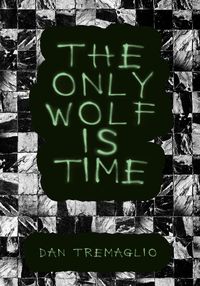
☞ The Only Wolf Is Time in Gnome Appreciation Society
“It feels like Tremaglio has carefully written the book on ceramic tiles and then dropped them, he has carefully put them back together as best as he can remember, what we get is a mind-bending fragmented journey into grief…. Tremaglio has crafted something rather beautiful here … don’t they say that “from chaos comes beauty”?… [T]he sort of book you’ll end up reading a second time to see if it ends the same way.”
—Jason Denness, in Gnome Appreciation Society
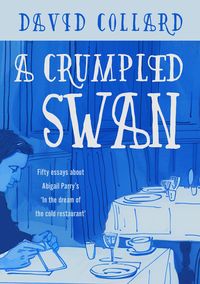
☞ Nuala O'Connor on A Crumpled Swan in Books Ireland
“Collard has the affable, chatty, word-in-your-ear quality of the bright, original friend you most love to talk with, because of their vision, cheerful erudition, and inclusivity…. A wide-sweep book like A Crumpled Swan is never easy to sum-up, except to say it’s a read-with-a-pencil volume—Collard knows things—and if you care for literature, you will find plenty of juicy detail, apt quotes, and other entertainments. The author takes us on a breathtaking wander through the dream origins of poetry, to a meditation on what poetry is for, to an interactive lesson in linguistics….The book is, all at once, a cheerful guidebook, an idiosyncratic map, and an energetic paean, and it exudes Collard’s glee and pleasure in the work.”
—Nuala O’Connor, in Books Ireland
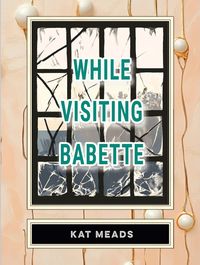
☞ While Visiting Babette in the Southern Literary Review
“This novella is ninety pages of sheer delight, a well-told story with a tender twist…. But be forewarned, for all its adroit charm (and it has tons), there is a poignant undertone…. Even if one did not know author Kat Meads is also a poet, one might suspect that from the lyrical, lovely phrasing.”
—Claire Matturro, in Southern Literary Review
☞ A Crumpled Swan in Never Imitate
“[B]oth intense and entertaining, offering as it does thoughts on Collard’s highly detailed interpretation on a line by line basis, and on poetry in general…. A Crumpled Swan is not a book to be rushed. There is much to consider and time should be given to allow reflection on Collard’s reasoning and exhortations. I gained much from my perusal including enjoyment. More than that, though, any reader will ever after carry with them the ability to read poetry through a clearer lens.”
—Jackie Law, in Never Imitate
☞ A Crumpled Swan in Quadrant
Lyn Ashcroft has a thoughtful essay on David Collard’s A Crumpled Swan in Australia’s Quadrant (paywall):
“In the process of examining Abigail Parry’s poem, Collard offers a refreshingly individual approach to poetry in the context of the Western world, especially the English-speaking Western world, as he discusses poetry’s characteristics, its pleasures, and the significance of its contribution to the enrichment of human life in general and of his own life in particular. He places no conventional academic wall of lofty impersonality between himself and his readers…. Collard is knowledge- able, entertaining and often very funny throughout the fifty essays which make up the book…. [which] is enlivened and enriched throughout (even in the footnotes) by Collard’s unfailingly acute sense of humour, that invaluable giver of perspective and joy, and even of Hobbesian sudden glory.”
—Lyn Ashcroft, in Quadrant