News
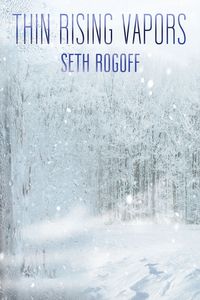
☞ Kenneth J. Pruitt interviews Seth Rogoff
In The Rumpus, Kenneth J. Pruitt interviews Seth Rogoff about Thin Rising Vapors and First, the Raven.
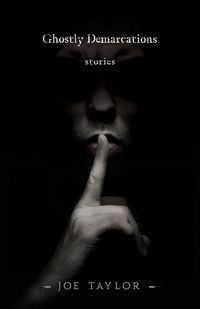
☞ Don Noble on Ghostly Demarcations in Alabama Public Radio
“These are in fact all ghost stories, the kind people used to tell around campfires to frighten one another. When reviewing any story collection, I strongly suggest taking one a day, like vitamins, and usually before retiring. In this case, if you are a highly suggestive or sensitive soul, read the stories in broad daylight, not just before retiring.”
☞ Allen Mendenhall interviews Joe Taylor
In Southern Literary Review, Allen Mendenhall interviews Joe Taylor about Ghostly Demarcations.
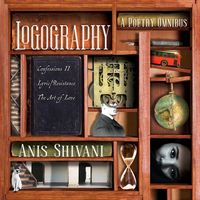
☞ Andrea Syzdek on Logography
“Logography is a truly successful poetry collection because it takes all the strengths of Shivani’s earlier work: compression, language, and historical/political/literary references and focuses them through a sharpened lyrical voice that is both heightened and distinct. Anis Shivani is a brilliant modern poet who is not afraid to take risks; his work is both expansive and radical in the sense that everything is fair game: language-play, metaphor, allusion, politics, and emotion. Logography represents a high-point in terms of his poetic abilities; these poems, in all of their visionary and conceptual beauty, provide a new sense of openness and possibility that Shivani can build on and develop as he continues to grow and excel as a poet. When reading these poems, it very much feels like ‘the leviathan is ear-splittingly close’ and ‘the monks / have plenty to eat.’”
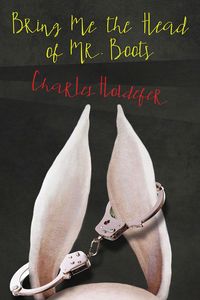
☞ Curtis Smith interviews Charles Holdefer
At Small Press Reviews, Curtis Smith interviews Charles Holdefer about Bring Me the Head of Mr. Boots.
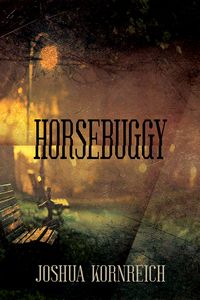
☞ Paul Cunningham on Horsebuggy in Fanzine
“Kornreich’s latest novel is all talk. Big talk. Small talk. Fast talk. Trash talk. Ten pages in and you might not be sure about who’s talking, but you’ll listen. You’ll listen like your life depended on it. Because you’ll want to know. You’ll want to know what’s going to happen to those horses…. Like Knotty, Knotty, Knotty (2014) and The Boy Who Killed Caterpillars (2007), the circuitous language and disturbing characters of Joshua Kornreich’s third novel harbor the stuff of nightmares…. Kornreich’s sentence structure is carefully crafted and distinctly repetitive. His novels might be better described as deformed and deforming language economies. Corrupted economies that mirror the same ones experienced by his corrupt and/or corruptible narrators…The adult characters of Horsebuggy often come across as smeared or half-erased persons. Smeared with the shit of childhood, the trauma of following orders. Of being disordered by masculine violence, racism, sexual violence, and the bloodstained fingers of bankers. Yet these poor souls are determined to survive in endlessly ending times. As if gnawing through the walls of a barn, these buggy, horse-drawn bodies want to twist around and chew through whatever they can for nourishment. It’s always about survival for Kornreich. It’s not all talk. It’s a mouthful. It’s business as usual.”
—Paul Cunningham, in Fanzine
☞ Horsebuggy in The Seattle Review of Books
“Joshua Kornreich’s Horsebuggy is a dark little surprise and joy, blackly funny in the vein of The Sisters Brothers. It’s the sort of book where everything leads to its logical conclusion—and nothing is more ridiculous and bleak than human nature allowed to run its course.”
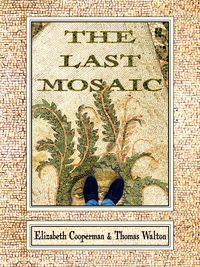
☞ Jesse Morse on The Last Mosaic in Poetry Flash
“One can correlate the sense of (a crumbling) permanence of an ancient mosaic on a wall or floor to this book in hand, flipped through again and again, entered at various places, eventually placed on a table, landing in a bookshelf, pulled out again and perused by a future reader. To appreciate a mosaic you don’t necessarily need to understand what lay behind it, or exactly when it was made or how it was constructed; the looking is enough…. This calling to and embodying of mosaics is perhaps best exemplified in the authors’ choice to never distinguish who, in fact, is speaking or writing. Conflating the narrator and author(s) is a reader’s natural tendency, but the beauty of this choice by the authors lies in forcing the reader to do away with that tendency; forcing the reader to take the text on its own terms, and consciously sever the desire to ascribe this moment to Cooperman or that moment to Walton…. One wonders, in fact, how Cooperman and Walton comprised the book. Were the moments between tildes written individually, and then put together, almost as a call and response? Were the authors prone to edit each other? Or, even further, did the authors write into each other’s lines? Do the authors even know, at this point, who wrote what? While surely the authors could answer these questions, the excitement lies in The Last Mosaic’s ability to, in fact, come off as mosaic while existing as written word. A third voice emerges: that of the mosaic.”
—Jesse Morse, in Poetry Flash
☞ Ghostly Demarcations in Kirkus Reviews
“Taylor excels at establishing unnerving moods…. The author’s greatest triumph is his protagonist. Even nameless, the narrator is distinctive. Readers, over the course of the stories, watch him move from a Catholic boarding school to college and endure such adolescent woes as his persistent virginity…. Throughout, Taylor has fun avoiding the narrator’s moniker: hobby-shop owner Max Howard of ‘I am the Egg’ sifts through a handful of incorrect names while Sylvia simply calls him Bookstore…. An understated but remarkable lead character.”
☞ Duncan Whitmire on Thin Rising Vapors in Colorado Review
“Rogoff casts his characters’ lives through the various looking glasses of memory, memoir, and myth until none of the characters—and least of all the reader—can be sure of the details, only their profound importance. The facts remain shrouded, but the consequences pierce the dark, loud as a loon’s call, shattering moments of quiet reflection and startling narrator and reader alike into new states of understanding. There is vanity in thinking one knows another person, and Ezra must confront the unrecognizable heart of his closest friend in order to discover a new and deeper intimacy. It is here, in the gap between objective and subjective, rational and intuitive, that subtler truths emerge.
“Such is Rogoff’s penchant for characterization that even inanimate objects in the cabin drip with personality: the Franklin stove Ezra feeds with the ritualistic attention of a priest every morning, the ghost-ridden Remington typewriter, an old Morehouse canoe paddle. Lovers, friends, shopkeepers, and long-dead relatives are all painted with attentive brushstrokes, endowed with the breath and vitality of a fully formed universe that continues to expand long after you put the book down.
“Some passages quiver with the nuanced terror of a Shirley Jackson story; others recall Camus as characters muse philosophically toward abstraction. But across every page flow the carefully crafted sentences of a letter written to a childhood friend, the kind of missive certain people might choose to type on an old Remington in the quiet solitude of a lakeside cabin.”
—Duncan Whitmire in Colorado Review