News
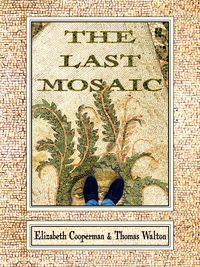
☞ Greg Bem on The Last Mosaic in Yellow Rabbits
“The Last Mosaic is a collection of poetic statements and musing describing travels in Rome by poet-authors Elizabeth Cooperman and Thomas Walton. This collection is the first major collaboration between these two poets, and one that sticks timely as a footnote (or page rip or cobblestone trip) in the long history of representation of humankind. Like Anne Carson or David Shields (both who literally show up in the book in various ways, along with countless other authors and inspiring minds), the words in The Last Mosaic are loosely clumped into a scattering of ideas, linked together loosely into themes.
“In other words, the poems (or sub-collections) serve as clusters of revelation and insight and ultimately as documentation of Cooperman and Walton’s witness and conclusion during their time in Italy. The words, then, serve to help the reader navigate the behemoth of consequence and history consistently present throughout the Rome and its surroundings. The book’s a marvelous feat, one that swirls around mystically and temporally. It is filled with context and subtext, direction and flotation, movement and stasis, evidence and obscurity.”
—Greg Bem, in Yellow Rabbits
☞ Nancy Dafoe on The Last Mosaic
“This beautiful text is at once paradoxically fragmented and flowing, like language itself. We are assured, ‘the brain will make up a coherent story instantly from seemingly disparate information,’ yet The Last Mosaic’s disparate epiphanies are juxtaposed in such a way that we feel their creator’s hands and minds at work. Interjections—communication fighting against itself—become our experience of life that is both lofty and vulgar…. We start our journey with getting lost and end with, ‘It’s best not to find the thing you’re looking for.’ Readers might just be surprised, however, to find just what they were looking for in this dense, yet airy, mosaic of a book.”
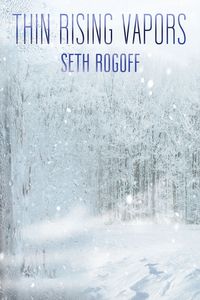
☞ Jacob M. Appel on Thin Rising Vapors in The Collagist
“Yet if Thin Rising Vapors is a novel of ideas, and a stimulating one at that, it also contains elements of a bildungsroman, albeit among the most intellectually challenging bildungsromane ever written…. If Rogoff’s first novel was periscopic, his second novel is impressively panoramic, as though Paul Auster had reimagined The Brothers Karamazov.
“Not all of the questions raised by Thin Rising Vapors, either factual or thematic, are answered in the text. Nevertheless, the novel’s conclusion proves highly satisfactory. Rogoff displays a notable gift for recognizing what to share and what to withhold, and precisely when in the narrative to do each—and therein lies the novel’s stirring magic. As Abel writes in one of his journal entries, ‘Too many perfectly fine moments are ruined by giving away the game. The unknown often needs to linger, like a fine spirit on the lips.’”
—Jacob M. Appel in The Collagist
☞ Paul Constant on The Last Mosaic in The Seattle Review of Books
“Mosaic is a tiny book—it slides comfortably into the back pocket of your most comfortable pair of jeans, with room for a pack of gum left over—and it’s deceptively easy to read. You could whip through it over a solo dinner at your favorite Italian restaurant, but you’d be wise to let the book breathe a bit, to allow your mind time and space to wander, the way Walton and Cooperman did. It’s easy to be dazzled by all the shiny fragments, but when you back up and admire Mosaic from a distance, you can see the narrative take shape. An argument forms, and the readers begin to understand what the authors discovered on their trip…. As a mimicry of the traveling mindset, I’ve never seen anything quite like Mosaic. It dissembles the traditional travel narrative and then reinforces it by encouraging the reader to fill in the narrative around the images and scholarship shards. Reading the non-book in the mortar lines between each fragment is far more rewarding than most travel books could ever hope to be.”
—Paul Constant, in The Seattle Review of Books
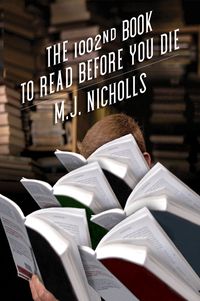
☞ Alastair Mabbott on The 1002nd Book To Read Before You Die in The Herald
“A savage postmodern satire written with the fervour of a true bibiliophile…. wickedly funny and wildly verbally inventive.”
—Alastair Mabbott in The Herald
☞ Camille-Yvette Welsch on The Last Mosaic in Foreword Reviews
“’A fragment defies the mind’s impulse to make things whole. Defies it, and entices it,’ and from just such fragments, Elizabeth Cooperman and Thomas Walton cobble together a hybrid work—parts travel journal, memoir, lyric essay, and prose poem. The authors take Rome as their muse, exploring its history, art, architecture, and famous dead to create a new palimpsestic work that enriches the bounty that Rome has inspired…. The book can be read as a series of poems or as a number of vignettes. But it is perhaps most useful to consider it by its own terms: as fragments that are beautiful in and of themselves, and which also function as a sum greater than its parts.”
—Camille-Yvette Welsch, in Foreword Reviews
☞ Alistair Braidwood on The 1002nd Book To Read Before You Die in Scots Whay Hae
“The 1002nd Book To Read Before You Die is a comic novel which takes its subject matter very seriously, and demands to be read in the same manner. It is a literary undertaking which needs the reader to engage fully. To do otherwise would be to miss out on what is, at times, an exhilarating experience…. M.J. Nicholls is doing something which feels and reads as new and exciting. If you love books then The 1002nd Book To Read Before You Die is one to read, before it’s too late.”
—Alistair Braidwood in Scots Whay Hae
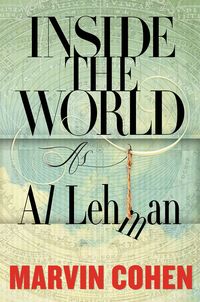
☞ Inside the World: As Al Lehman in Foreword Reviews
“By turns quirky, touching, amusing, and sad, Inside the World: As Al Lehman is an intellectual achievement that rivals some of the best literary fiction of the last half century.” —Foreword Reviews