News
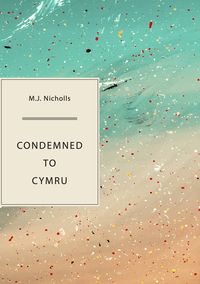
☞ Jason Denness on Condemned to Cymru in The Gnome Appreciation Society
“Once you start digging deeper you’ll see just how clever the book is.”
—Jason Denness, in The Gnome Appreciation Society
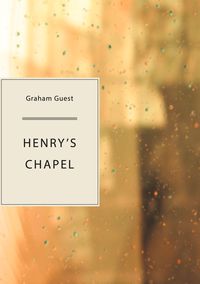
☞ Jacob M. Appel on Henry's Chapel in 3:AM Magazine
“Meta-fiction … is an inherently inventive and transgressive genus, so engaging with the genre in innovative ways can prove challenging. What worthwhile ore is to be found that has not already been mined and displayed by Laurence Sterne or John Fowles or David Foster Wallace? To its credit, Henry’s Chapel manages to turn up gem after gem…. [It] is a decidedly real and raucous masterwork about an unreal and likely unwatchable film. Only an extraordinary talent can transform a B-movie into a literary tour de force, and Guest has done so with wit, class and insight.”
—Jacob M. Appel, in 3:AM Magazine
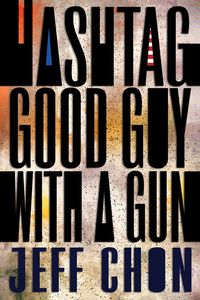
☞ Jon Doyle on Hashtag Good Guy With a Gun in Various Small Flames
“Unlike the dichotomous model of trees, rhizomatic plants and fungus grow in all directions with no central point…. Jeff Chon’s debut novel, Hashtag Good Guy With a Gun, applies the rhizomatic model to our conspiratorial age…. Chon brings this concept to life stylistically, circling the incident at the restaurant and providing glimpses into every occurrence and character which played some role in it, no matter how tangential. Hashtag Good Guy With a Gun comes to represent its own interlinked structure. The narrative is not linear. There is no present per se, just a series of scenes before, during and after the precipitating event. Vignettes presented out of order, and themselves prone to flashing back to some previous scene or revealing an as yet unrealised future. A story, for all of its male vanity and violent fervour, with no final villain or point of blame.”
—Jon Doyle, in Various Small Flames
☞ Christopher Lura on Henry's Chapel in Heavy Feather Review
“It is difficult to come up with an easy comparison for this book in contemporary fiction. Many aspects of the book and the characters’ behavior—including the southern setting and disturbing characters—will remind us of early Cormac McCarthy, particularly Outer Dark and Child of God. But unlike most novels in the traditions of McCarthy or Faulkner or the Southern Gothic, Guest’s narrator is steeped in continental theory, and makes regular analytical detours into discussions of Quine, Nietzsche, and Jung to try to understand these characters and the implications of their brutal existence….
“But in other ways, Henry’s Chapel, despite its meta-narrative structure and intensive experimentation, fits squarely into key strains of the American novel—this is most notable in its heavy reliance on its use of the Old and New Testament to turn Henry’s story into a fable of human nature itself. The novel’s opening is illustrative—a striking retelling of the Book of Genesis: here, instead of God breathing air into the world and giving life, God simply coughs up a glob of nasal drip—a loogy, to be precise—and spits it out, thus creating what we know today as humanity.”
—Christopher Lura, in Heavy Feather Review
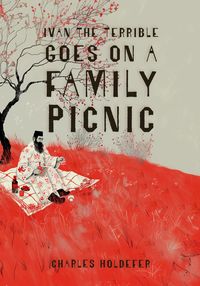
☞ “Ivan the Terrible Goes on a Family Picnic,” the title story of Ivan the Terrible Goes on a Family Picnic
The Brooklyn Review published the title story of Ivan the Terrible Goes on a Family Picnic.
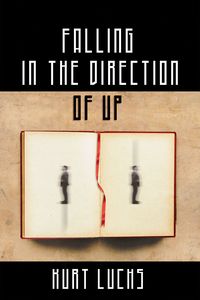
☞ Jonas Elbousty on Falling in the Direction of Up in Prospectus
“[W]ritten with sharp wit and utmost creativity…. Luchs does not only express his inner thoughts, memories, and feelings, but he also engages the readers in interpreting, analyzing, and reflecting on them. Readers interested in poems whose style, rhythm, and structure transcend rigid and traditional poetry will enjoy reading this poetry collection.”
—Jonas Elbousty, in Prospectus (Issue 5)
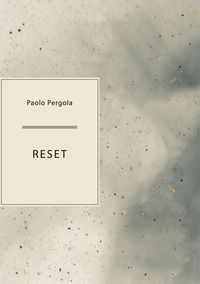
☞ Ally Geist on Reset in F(r)iction
“Reset by Paolo Pergola is an engaging exploration of what it means for your life to be put on hold in an instant, forcing you to critique your existence and your society….
“Despite the fact that Lapo is trapped in a hospital bed for over a hundred pages, the book feels action-packed. Pergola takes readers on a cerebral journey chapter after chapter. In a way, it’s more exciting than if we constantly witnessed a changing location. Since most of the narrative exists in Lapo’s head, readers must connect with him on an intimate level. Even the conversations he has with others are told to us through his perspective….
“The narrative itself flows beautifully. It’s rare to encounter a book in which it feels like every sentence serves a purpose. Paolo Pergola skillfully gives readers a book that is engaging right to the end, without that common lull in the middle of the book…. If you are looking for a book to captivate you, move you, and make you think about things in a different way, this is definitely one to pick up off the shelf.”
—Ally Geist, in F(r)iction

☞ Colgate University Theater stages Kinderkrankenhaus
Colgate University Theater’s spring production of Kinderkrankenhaus, at the Brehmer Theater, with autistic actors in most of the main roles.